
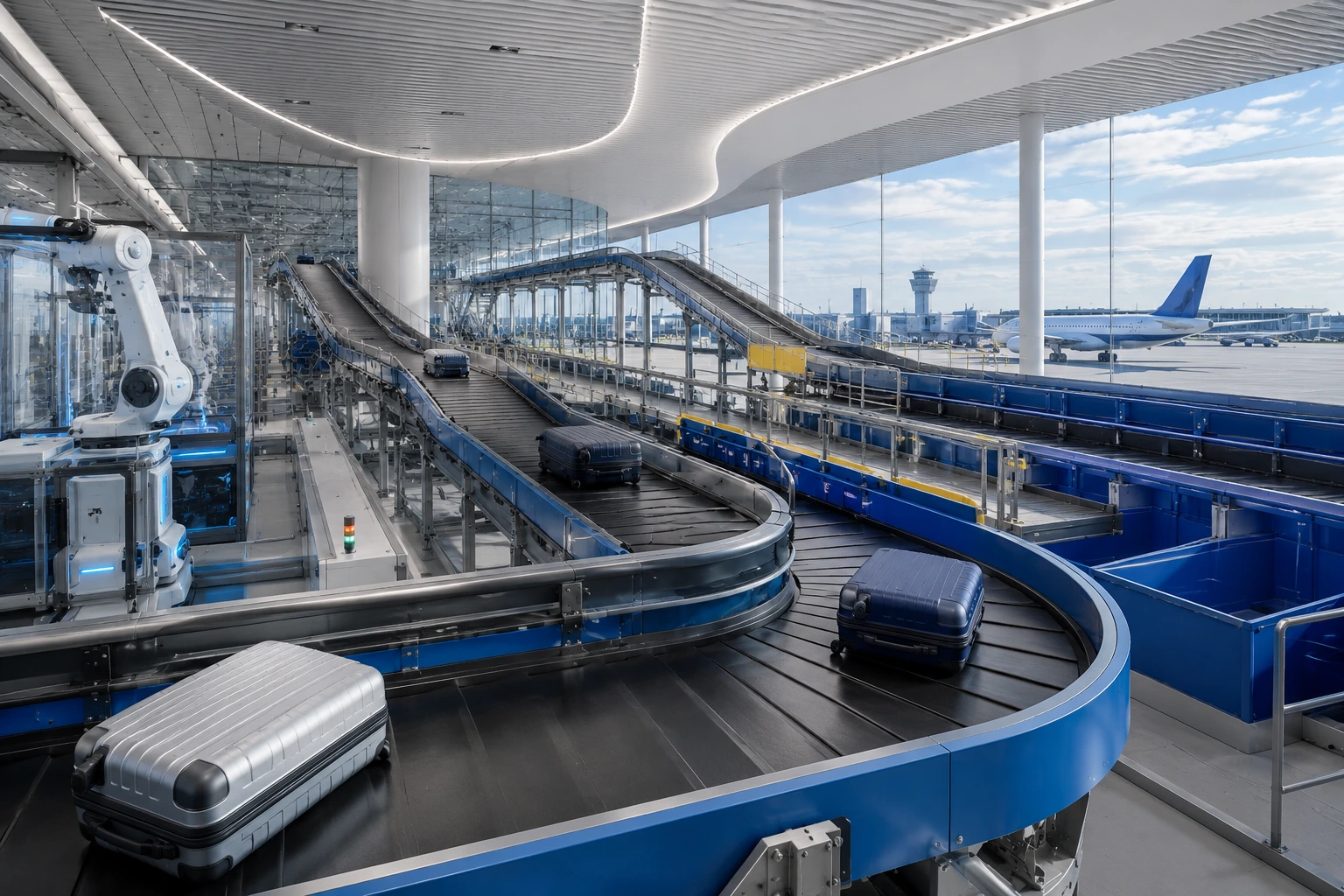
The aviation industry is evolving faster than ever. Passenger expectations are increasing, airport infrastructure is expanding, and operational efficiency has become a top priority for airports worldwide. In 2026, baggage handling systems are no longer viewed as simple conveyor networks — they are now considered mission-critical airport infrastructure.
For aviation consultants, staying updated with the latest baggage handling design trends is essential for delivering future-ready airport solutions. At Mexeltec, we specialize in advanced baggage handling design consultancy, helping airports create scalable, intelligent, and high-performance systems tailored to modern aviation demands.
If you are involved in airport planning, aviation infrastructure, or baggage handling consultancy, these are the key trends shaping the future of airport baggage handling systems.
1. Smart Automation Is Becoming the Standard
Traditional baggage handling systems relied heavily on manual intervention. That model is rapidly disappearing.
Modern airports are investing in intelligent automation to improve speed, accuracy, and operational efficiency. Automated baggage handling systems reduce human error, increase throughput, and improve passenger satisfaction.
Today’s smart baggage systems include:
- Automated sortation systems
- Intelligent conveyor routing
- Real-time baggage tracking
- Automated scanning and screening
- Smart load balancing
- AI-driven operational monitoring
Airports that fail to modernize their baggage infrastructure risk delays, congestion, and poor passenger experiences.
For aviation consultants, automation planning is no longer optional — it is a necessity.
2. Scalability Is Now a Core Design Requirement
One of the biggest mistakes airports make is designing baggage systems only for current passenger traffic.
The reality is simple:
Passenger volumes will continue to grow.
Modern baggage handling design must support future expansion without requiring complete system replacement.
That means consultants must focus on:
- Modular conveyor layouts
- Expandable sortation systems
- Flexible routing strategies
- Space-efficient system architecture
- Future terminal integration planning
At Mexeltec, scalability is a key part of every baggage handling consultancy project because airports need infrastructure that grows with operational demand.
3. Passenger Experience Is Driving System Design
Airports are becoming highly customer-focused environments.
Passengers expect:
- Faster baggage delivery
- Minimal waiting time
- Real-time baggage visibility
- Fewer lost luggage incidents
- Smooth airport movement
This shift is changing how baggage handling systems are designed.
Modern consultants must optimize systems for both operational efficiency and passenger satisfaction.
Design priorities now include:
- Faster reclaim systems
- Reduced transfer times
- Intelligent baggage routing
- Real-time baggage information systems
- Congestion-free layouts
The airports delivering the best passenger experiences are investing heavily in baggage handling modernization.
4. Data-Driven Operations Are Transforming Airports
Airport operators now rely on operational data to improve performance and decision-making.
This is why modern baggage handling systems are increasingly integrated with:
- IoT sensors
- Predictive analytics
- AI-based monitoring
- Digital twins
- Centralized control systems
- Performance dashboards
These technologies help airports:
- Predict maintenance issues
- Reduce downtime
- Optimize conveyor performance
- Improve baggage tracking accuracy
- Increase operational visibility
For aviation consultants, understanding smart airport technologies is becoming just as important as understanding conveyor mechanics.
5. Inline Security Screening Integration Is Expanding
Security requirements continue to evolve globally.
Modern airports now integrate baggage screening directly into baggage handling systems rather than treating security as a separate process.
This trend improves:
- Passenger flow
- Operational efficiency
- Security compliance
- Space utilization
Modern baggage handling consultancy now requires expertise in:
- Inline screening integration
- Security checkpoint optimization
- Explosive detection system coordination
- Conveyor screening interfaces
- Compliance planning
Aviation consultants must ensure security integration happens seamlessly without slowing airport operations.
6. Sustainability Is Influencing Airport Infrastructure Decisions
Sustainability is no longer a marketing buzzword.
Airports worldwide are under pressure to reduce energy consumption and improve environmental performance.
This directly impacts baggage handling system design.
Modern airports are looking for:
- Energy-efficient conveyor motors
- Smart power management
- Reduced system downtime
- Sustainable material selection
- Lower operational waste
- Efficient layout planning
Consultants who understand sustainable baggage handling design will have a significant competitive advantage in the coming years.
7. Supplier-Neutral Consultancy Is Becoming More Valuable
Airports are increasingly seeking independent, supplier-neutral baggage handling consultants.
Why?
Because airports want solutions optimized for operational performance — not systems designed around a single manufacturer’s products.
Supplier-neutral consultancy provides:
- Objective system recommendations
- Better long-term flexibility
- Competitive procurement opportunities
- Optimized operational planning
- Technology adaptability
At Mexeltec, we focus on performance-driven baggage handling consultancy tailored to each airport’s operational goals and infrastructure requirements.
8. Digital Simulation and System Modeling Are Now Essential
Before modern airports invest millions into baggage handling infrastructure, they want proof that systems will perform efficiently.
This is why digital simulation has become a major trend.
Consultants now use advanced modeling tools to simulate:
- Passenger traffic flow
- Conveyor throughput
- Peak operational loads
- Transfer baggage movement
- Bottleneck analysis
- System redundancy performance
Simulation-based consultancy helps airports reduce risk and improve decision-making before implementation begins.
9. High-Speed Sortation Systems Are Growing in Demand
As airports become busier, baggage handling speed becomes critical.
Modern airports require high-speed sortation systems capable of handling large baggage volumes without compromising accuracy.
This trend is driving demand for:
- Tilt-tray sorters
- Cross-belt sorters
- High-speed diverters
- Smart routing systems
- Dynamic conveyor controls
For consultants, understanding advanced sortation technologies is becoming increasingly important for large airport projects.
10. Integrated Airport Infrastructure Planning Is the Future
Baggage handling systems no longer operate independently.
Modern airport design focuses on complete infrastructure integration involving:
- Passenger flow systems
- Security operations
- Check-in systems
- Aircraft turnaround operations
- Terminal management systems
- Logistics coordination
This integrated approach improves overall airport efficiency and operational performance.
The future belongs to consultants who understand how baggage handling fits into the bigger airport ecosystem.
Final Thoughts
Airport baggage handling systems are evolving rapidly, and aviation consultants must adapt to changing technologies, operational demands, and passenger expectations.
From automation and AI integration to sustainability and smart infrastructure planning, the future of baggage handling consultancy is centered around intelligent, scalable, and performance-driven system design.
Airports that invest in modern baggage handling infrastructure today will gain a significant operational advantage tomorrow.
At Mexeltec, we provide expert baggage handling design consultancy solutions focused on innovation, efficiency, scalability, and long-term airport performance. Our consultancy services help airports build smarter baggage handling systems that meet the demands of modern aviation infrastructure.