
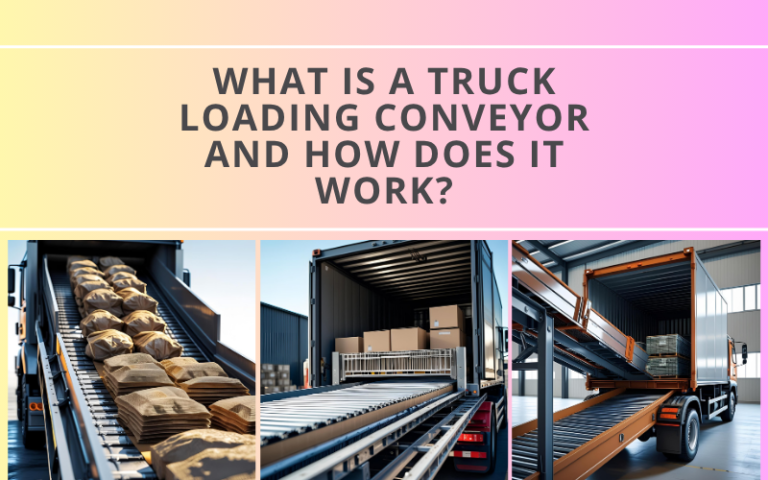
What Is a Truck Loading Conveyor and How Does It Work?
When you’re running a warehouse, factory, or shipping center, one of the trickiest tasks is getting goods in and out of trucks quickly and safely. That’s where truck loading conveyors come in. These machines help move items smoothly from your storage area right into the back of a truck—no heavy lifting or back-and-forth needed.
Let’s look at what they are, how they work, and why more businesses are relying on them every day.
What’s a Truck Loading Conveyor, Anyway?
A truck loading conveyor is a long, moving system—usually a belt or rollers—that’s used to load or unload items from trucks. Instead of carrying boxes by hand, workers can place goods on the conveyor, and it does the rest.
It’s commonly seen in:
- Warehouses
- Distribution centers
- Factories
- Airports
- Courier hubs
The goal? Make loading quicker, easier, and safer for everyone.
How Does It Work?
It’s actually pretty simple. Here’s what usually happens:
- Position the conveyor: Line it up with the back of the truck.
- Start loading: Put boxes or goods onto one end.
- The system moves the load: The items roll or slide into the truck.
- Unload, too (if needed): Some models can go both ways—great for unloading shipments.
Some conveyors are straight and fixed. Others are adjustable, foldable, or even extend inside the truck to reach deep inside the trailer.
Why Use One?
If you’re wondering whether it’s worth investing in a loading conveyor, here are a few good reasons:
- Speeds up the job: Load a truck in less time, with fewer workers.
- Easier on your team: No more repeated heavy lifting.
- Reduces errors and damage: Items move smoothly instead of being dropped or tossed.
- Improves safety: Fewer chances of injury or accidents.
It’s a smart tool, especially if your business moves lots of goods daily.
Different Types of Truck Loading Conveyors
There’s no one-size-fits-all. The right conveyor depends on your needs:
1. Fixed Belt Conveyor
A straight, simple machine. Great for setups where you always load the same way.
2. Inclined Conveyor
This one’s built to move things up or down a slope—perfect if your truck isn’t at the same level as your floor.
3. Telescopic Conveyor
A real space-saver. It stretches out when needed and slides back in when you’re done. Ideal for big trucks.
4. Flexible Roller Conveyor
Think of it like a bendy conveyor. It moves, curves, and folds as needed. Great for tight or changing spaces.
Who Uses These Conveyors?
Plenty of industries benefit from these systems, such as:
- E-commerce companies – Especially during sales and holidays
- Manufacturers – To move finished goods to shipping
- Retail stores – For bulk product handling
- Airports – For loading bags and cargo
- Delivery services – Speed is everything here
Picking the Right Conveyor
Choosing a conveyor depends on a few things:
- What are you loading? Boxes? Bags? Heavy parts?
- How big is your space? Some systems fold away, others are fixed.
- How often do you load trucks? Daily? Hourly?
- What’s your budget? There’s something for every price range.
It helps to speak with a supplier who understands your work environment and can guide you to the right fit.
Taking Care of Your Conveyor
Just like any machine, a little care goes a long way. Here’s how to keep yours in top shape:
- Clean it regularly
- Check for loose parts
- Watch for any unusual noises
- Keep moving parts well-oiled
- Train your team to use it properly
These steps will make sure your conveyor runs smoothly for years.
In Closing
A truck loading conveyor may not look like much at first—but once you use one, you’ll wonder how you ever managed without it. It helps your team move faster, safer, and with less effort.
Whether you run a small warehouse or a busy logistics hub, the right conveyor system can make a big difference in daily operations.
 Looking for the right conveyor for your setup?
At Mexeltec, we help businesses find the best-fit material handling solutions—including truck loading conveyors built to last. Reach out to our team and we’ll help you choose the perfect model.